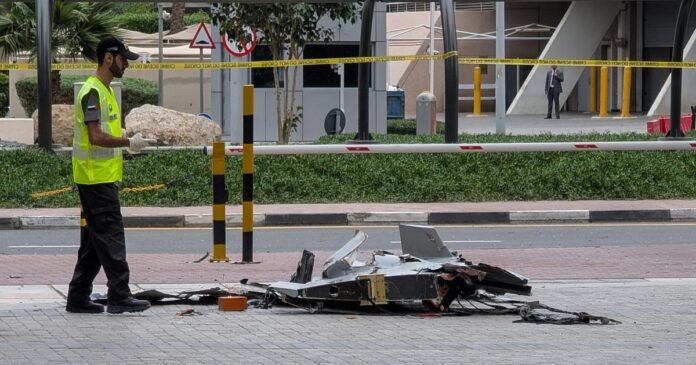

British citizens residing in the United Arab Emirates (UAE) have received a cautionary message regarding the potential repercussions of disseminating images or videos depicting war-related events amidst the ongoing conflict in the Middle East.
This advisory follows an incident where a British tourist faced legal charges under cybercrime regulations in Dubai for allegedly sharing video footage of missile attacks. The individual, a 60-year-old man from London, is among 21 individuals accused of violating the UAE’s stringent laws against filming or posting social media content related to conflicts, as reported by Detained in Dubai, a legal advocacy group.
The British Embassy in the UAE recently issued a statement emphasizing the prohibition on photographing, posting, or sharing images of conflict sites, damage caused by projectiles, as well as government structures and diplomatic premises. Violations of these laws could result in fines, imprisonment, or deportation for British nationals, underlining the importance of compliance with UAE regulations.
In a social media update, the embassy highlighted the multiple warnings issued by UAE authorities against documenting and sharing images or videos of incident sites or damage caused by projectiles or shrapnel. The laws extend to various forms of sharing, including social media posts and messaging applications, with specific restrictions on photographing certain locations like government buildings and diplomatic missions.
The 60-year-old individual was detained in Dubai after reportedly deleting the contentious footage from his device upon request by authorities, claiming no deliberate wrongdoing. However, Detained in Dubai’s director, Radha Stirling, revealed that the charges against him and others involve allegations of disseminating rumors or provocative content that could jeopardize public security.
Stirling cautioned that UAE cybercrime laws are stringent, with one post potentially leading to multiple arrests and severe consequences such as lengthy prison terms. Residents could also be detained under national security statutes, facing prolonged incarceration, limited embassy access, and potential human rights violations. Consequently, Stirling advised exercising extreme caution during periods of heightened tension.
A recent social media post by the UAE Public Prosecution reiterated the legal accountability for sharing or reposting content from unknown sources, emphasizing the responsibility of individuals to verify information and refrain from spreading rumors, which are considered criminal acts in the country.