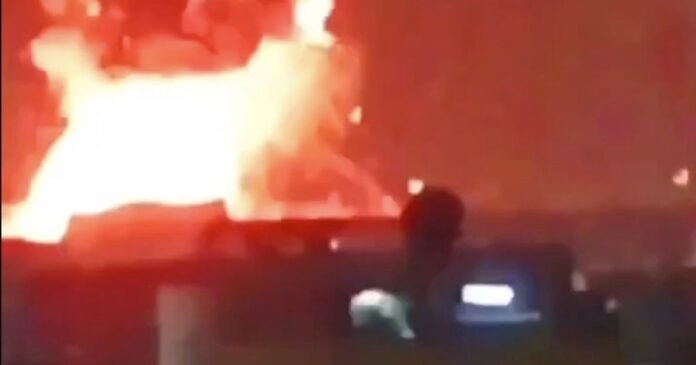

Chaos persists in the Middle East following recent strikes by the US and Israel on Iran, with President Trump issuing a menacing threat to destroy the world’s largest gas field. Iran retaliated against Gulf Arab neighbors’ energy infrastructure after an Israeli attack on the South Pars gas field, leading to fires at Qatari LNG facilities and Kuwaiti oil refineries. These attacks have escalated the ongoing conflict in the region, resulting in a surge in global fuel prices.
President Trump responded to the situation by warning Iran that any further strikes on Qatar’s energy infrastructure would prompt a massive retaliation from the US, targeting the South Pars gas field. Trump stated that the US had no prior knowledge of the specific attack and emphasized that Qatar was not involved. He made it clear that the US, with or without Israel’s assistance, would take drastic measures in response to any future attacks on Qatar’s energy facilities.
The tensions in the region were further highlighted by incidents such as a ship burning off the coast of the United Arab Emirates and another being damaged near Qatar due to Iran’s actions in the Strait of Hormuz. Qatar managed to extinguish a fire at a major LNG facility hit by Iranian missile attacks, but the damage caused could impact the country’s ability to supply natural gas to global markets even after the conflict with Iran is resolved. Additionally, drone attacks on Kuwait’s refineries and disruptions to gas facilities in Abu Dhabi further exacerbated the situation.
Saudi Arabia, Qatar, and the United Arab Emirates condemned the Iranian attacks, with Saudi Arabia expressing a loss of trust due to the assaults on their territory. Iranian President Masoud Pezeshkian warned of unpredictable consequences that could have a global impact. The ongoing conflict poses a threat to regional stability and energy supplies, with countries in the Middle East on high alert for further escalations.