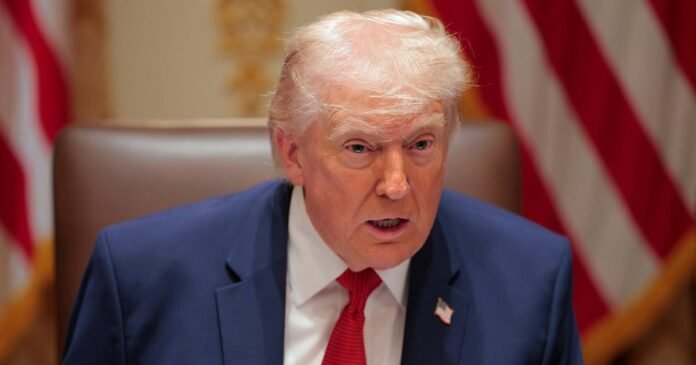

President Donald Trump has issued a stern warning to Iran, threatening to destroy its critical oil wells and power plants unless the Strait of Hormuz is swiftly reopened for business. Trump, in a statement on Truth Social, mentioned ongoing discussions with Iran’s purportedly more moderate government but emphasized the potential for severe consequences if an agreement is not promptly reached. He reiterated his intentions to target Kharg Island, a vital fuel hub.
In his message, Trump stated, “The United States of America is in serious discussions with A NEW, AND MORE REASONABLE, REGIME to end our Military Operations in Iran.” He further conveyed that failure to reach a deal and the immediate opening of the Strait of Hormuz could result in the obliteration of Iran’s key infrastructure, including electric generating plants, oil wells, and potentially desalination facilities.
The escalation in tensions has coincided with a surge in oil prices, reaching $115 (£86) per barrel. Recent attacks have been reported in Iran, Lebanon, and Israel, leading to significant casualties. Human rights group HRANA disclosed a death toll of 3,461 in Iran, with civilians and children among the victims. Lebanon, Iraq, and Israel have also suffered losses, with the conflict showing no signs of abating.
Amnesty International raised concerns over the potential consequences of US strikes on Iran’s energy infrastructure, warning of potential war crimes. The organization urged President Donald Trump to retract his provocative threats, emphasizing the catastrophic impact on civilians and the violation of international laws protecting civilian infrastructure during conflicts.
Meanwhile, UK Prime Minister Keir Starmer assured that British troops would not be deployed in Iran, asserting the country’s commitment to safeguarding its interests and supporting the reopening of the Strait of Hormuz. Starmer underscored the UK’s defensive actions aimed at protecting British citizens, interests, and regional allies.
The situation remains tense as global leaders navigate diplomatic challenges and strive to prevent further escalation in the volatile region.