
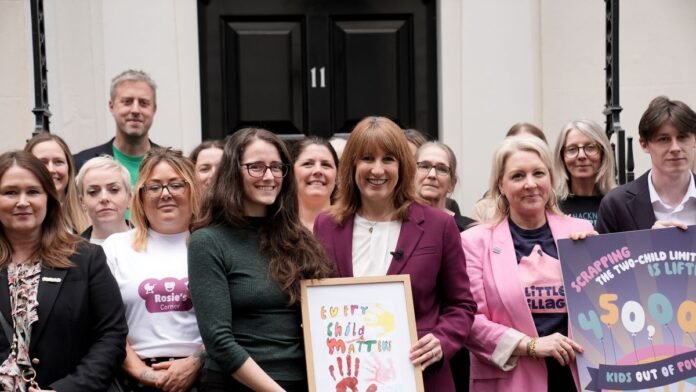

Rachel Reeves is determined to ensure that the removal of the two-child benefit limit remains permanent and cannot be reinstated by Reform UK or the Conservative Party. The Chancellor emphasized the importance of preventing any political party from proposing the reintroduction of this unpopular policy, which was recently abolished and is expected to lift 450,000 children out of poverty.
The controversial policy, implemented during the austerity period by Chancellor George Osborne, limited Universal Credit to the first two children in a family, leading to criticisms for exacerbating child poverty. Despite pledges from Nigel Farage’s Reform UK and Kemi Badenoch’s Conservatives to bring back the two-child benefit limit, Reeves expressed her commitment to safeguarding the current change.
During a reception at No11 Downing Street to celebrate the policy’s removal, Reeves stressed the need to continue advocating for policies that benefit society and garner broad public support. She commended the efforts of campaigners who fought for the abolition of the Tory policy, highlighting the positive impact it will have on lifting children out of poverty.
In response to the plans of Reform UK and the Tories to reinstate the two-child benefit limit, Reeves condemned the potential consequences of pushing children back into poverty. She criticized such actions as a deliberate choice by the government, echoing concerns raised during Osborne’s tenure and the potential revival of similar policies by the current parties.
The decision to scrap the policy last year followed internal debates within the Labour party, leading to the suspension of seven Labour MPs for opposing the government’s stance in 2024. Reeves defended the timing of the policy change, citing ongoing efforts to reduce child poverty and the strategic financial planning required for such policy adjustments.
Reeves also highlighted the financial measures taken to support the removal of the two-child limit, including a review of gambling company taxation and the introduction of new taxes on online betting and gaming. These initiatives contributed significantly to funding the policy change and aligning with the government’s commitment to addressing child poverty effectively.