
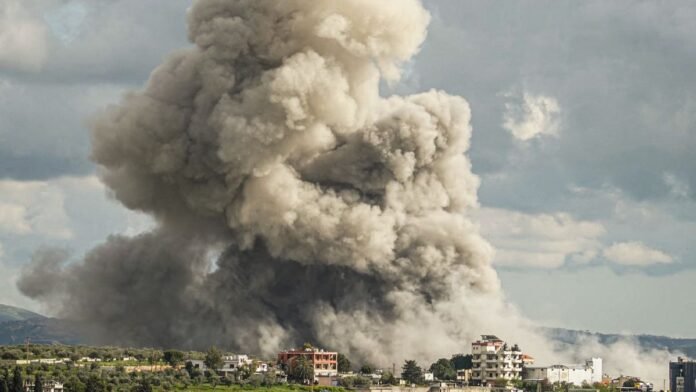

The escalating tensions in Iran are heightening the potential for Tehran-backed terrorist attacks in Europe, extending to the UK, as outlined in a recent security report.
The conflict in Iran is feared to evolve into a covert war involving terror-style assaults, such as arson and targeted violence against individuals or groups in shadowy realms.
Amid a ten-day ceasefire between Israel and Lebanon, law enforcement in central London investigated ‘discarded items’ in a park following a false video suggesting an attack on the Israeli Embassy by drones carrying hazardous substances.
The turmoil in the Middle East has raised concerns about Tehran’s clandestine Islamic Revolutionary Guard Corps collaborating with proxy factions and extremist entities to carry out attacks.
According to the report, there is a potential for the utilization of criminal syndicates to facilitate or execute violence against targets in cities across Europe, including Britain.
The primary focus of retaliatory strikes is expected to be on US, Jewish, and Israeli interests, particularly in regions like the UK where incidents of anti-semitism have been on the rise.
Recent incidents, such as the torching of four ambulances owned by the Jewish Community Ambulance Service in north London, underscore the looming threat of such attacks.
The concerns were amplified as specialists from the police Chemical, Biological, Radiological, and Nuclear team examined items in London’s Kensington Gardens near the Israeli embassy, prompting closures in the vicinity.
Notably, a recent report by The Soufan Report, led by former FBI expert Ali Soufan, warns of heightened terrorism risks in Europe and neighboring regions due to the escalating US-Israeli conflict with Iran.
A security guard working in the area, which also houses the Iranian embassy, mentioned being on high alert due to the Iran war, emphasizing the need for enhanced vigilance given the location.
The report highlights the increased risk posed by terror-style attacks, which are cost-effective yet have a significant impact on individuals and communities.
It cautions against a shift towards deniable, low-cost operations aimed at creating psychological impacts, potentially involving proxy individuals influenced and paid by Iranian operatives.
The evolving threat landscape, characterized by ambiguous attacks, could lead to insecurity and societal destabilization as Tehran seeks to distance itself from the perpetrators.
Since the commencement of US President Donald Trump’s Operation Epic Fury, incidents across Europe have exposed the growing menace, including attacks targeting Jewish communities and US-affiliated assets.
While Iran has reopened the Strait of Hormuz during the ongoing ceasefire, concerns linger over the fragile nature of the Israel-Lebanon truce.
The report cites various attacks across Europe, including incidents near the US embassy in Oslo and a foiled bombing plot at the Bank of America in Paris, underscoring the complex and evolving nature of the threat.
It emphasizes the use of minors in recruitment for attacks, as seen in the Paris incident, highlighting the amateurish yet impactful nature of these assaults.
As tensions persist, the potential for further attacks on Jewish targets outside the Middle East remains a significant concern, reflecting the broader implications of the Iran war on global security.
President Trump has hailed the Lebanon ceasefire as a historic step for the region while suggesting progress towards a separate deal to end the conflict between the US and Iran.