
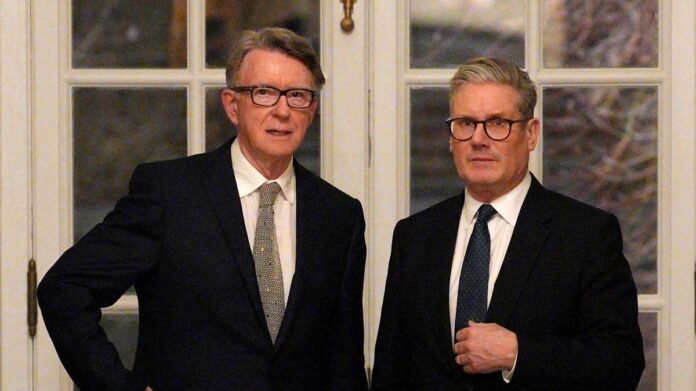

Keir Starmer criticized the Foreign Office officials during a challenging session concerning the Peter Mandelson controversy, aiming to secure his political standing. Starmer expressed his disappointment at not being informed about Mandelson’s security clearance failure and defended his decision to dismiss Sir Olly Robbins, who is expected to testify before MPs soon.
During heated exchanges, MPs Lee Anderson and Zarah Sultana were ejected from the Commons for accusing the Prime Minister of dishonesty. Starmer emphasized that the decision to withhold crucial information from him was intentional, not accidental.
Recently, Sir Olly Robbins was dismissed from the Foreign Office for failing to disclose Mandelson’s vetting failure to Starmer. However, Robbins’ supporters argue that he acted appropriately and criticized Starmer for sacrificing him. UN diplomat Tom Fletcher defended Robbins’ integrity and dedication to public service.
Following a lengthy and tense interrogation, Starmer faced criticism from various quarters and was accused of deception by the ejected MPs. Starmer maintained that he wouldn’t have appointed Mandelson had he been aware of the vetting issues and directed blame towards Sir Olly Robbins.
Additionally, Liberal Democrat leader Sir Ed Davey urged former Cabinet Secretary Lord Simon Case to testify before MPs. Davey highlighted the importance of following due process and transparency in political appointments.
In a separate development, it was revealed that the Prime Minister was advised to conduct security vetting before appointing an ambassador to the US. This revelation raised concerns about the handling of political appointments within the Foreign Office.
Labor MP Kim Johnson questioned the PM’s judgment in appointing Mandelson, citing his controversial past. Johnson criticized the decision to appoint Mandelson to a senior diplomatic role, given his history of misconduct.
In response to mounting scrutiny, Starmer denied misleading the House of Commons and expressed dissatisfaction with Sir Olly Robbins’ handling of the vetting process. Starmer emphasized the need for transparency and accountability in governmental appointments.
The ongoing controversy surrounding Mandelson’s appointment prompted intense questioning from MPs across party lines, with concerns raised about the lack of transparency and due diligence in the selection process. Starmer pledged to reform the appointment procedures to prevent similar incidents in the future.
The session concluded with Starmer acknowledging the need for improved communication and transparency within the Foreign Office. The PM emphasized the importance of upholding integrity and accountability in political appointments.