

Canada’s initiative to construct a $267 million medical countermeasures laboratory in Winnipeg is seen as a crucial step in preparing for future pandemics. However, experts caution that the facility will encounter significant challenges related to sustainable funding, staffing, and governance.
The federal government recently awarded a $10.2 million design contract for the facility, which is scheduled to open in 2033 adjacent to Winnipeg’s National Microbiology Laboratory (NML). While the laboratory’s purpose is to fill a critical gap in testing early-stage vaccines, treatments, and diagnostic tools, health researchers emphasize that merely having a new building will not suffice without continued investments in skilled personnel over the long term.
According to Dr. Joanne Liu, a physician and professor at McGill University, establishing a world-class center requires not only a physical structure but also a team of experts dedicated to the cause. She stresses the importance of backing up the plan with concrete actions.
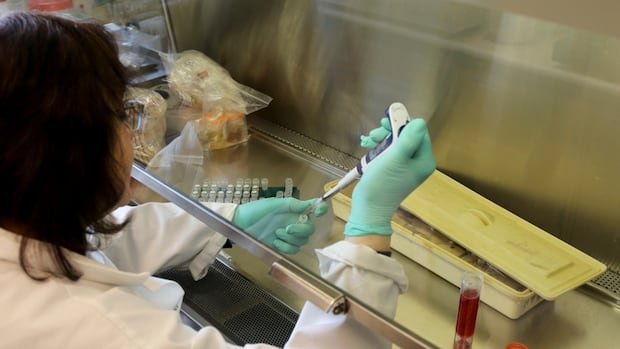
The new facility aims to expand Canada’s capacity for preclinical trials, providing dedicated space for laboratory and animal testing within the country’s research and development pipeline. Currently, due to space constraints, the NML sometimes repurposes labs intended for high-risk pathogen research to conduct preclinical tests.
Industry and academic partners may have access to the laboratory spaces, subject to appropriate agreements and screening procedures. The lack of local cleanrooms in Canada has hindered university researchers from advancing vaccine discoveries to human safety trials, as noted by Keith Fowke from the Canadian Institutes of Health Research.
Experts view the expansion of Canada’s capabilities in preclinical research as essential, with discussions on the topic dating back at least a decade. Gary Kobinger, a former NML scientist involved in developing the world’s first successful Ebola vaccine, emphasizes the need for long-term stability and funding to drive progress.
Investing in pandemic research may receive widespread support during crises, but sustaining funding during non-emergency periods is equally crucial, according to McGill’s Liu. She emphasizes the importance of continuous investment across all stages of virus research, even when the topic is not in the spotlight.
Concerns about staffing cuts at the NML in recent years raise questions about the facility’s ability to attract top-tier researchers. Liu stresses that promising a new building is insufficient; funding for research, salaries, and operational costs is essential for attracting and retaining talent.
The governance structure of the countermeasures lab is a significant consideration, with Kobinger warning against excessive bureaucracy and funding challenges if the facility is solely government-run. He cites past challenges with technology transfer and commercialization in Canada’s handling of the Ebola vaccine.
In light of delays at the Biologics Manufacturing Centre in Montreal, experts stress the need for effective leadership and streamlined processes in government initiatives. While PHAC highlights significant federal investments in the life sciences sector, the success of projects like the countermeasures lab will hinge on effective management and collaboration between public health officials and private industry.