
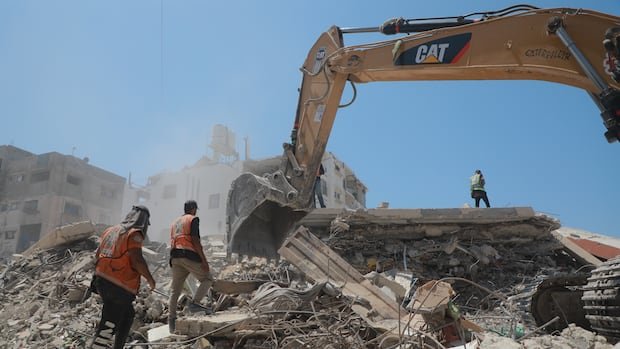

In the heart of Gaza City, members of the Al-Drimli family are engaged in a painstaking search for the remains of their friend and neighbor amidst the debris of their former residence. Armed with only shovels, buckets, a wheelbarrow, and sheer determination, they toil under the scorching midday sun. The atmosphere is filled with the rhythmic clang of shovels against rubble and the hum of an electric saw.
The Al-Drimli family, having already recovered the remains of their own loved ones, now focus on locating a neighbor who was present during the building’s destruction in November 2023. According to the Gaza Health Ministry, an estimated 8,000 to 10,000 bodies still lie buried beneath the rubble nearly three years after the onset of the conflict between Israel and Hamas.
With a severe scarcity of excavators in Gaza, many Palestinians, like the Al-Drimli family, resort to manual labor due to the exorbitant costs and limited availability of equipment. Ayman Al-Drimli expressed to CBC News freelance videographer Mohamed El Saife that their reliance on manual tools is a result of the prohibitive expenses and scarcity of machinery.
The shortage of functioning excavators in Gaza is exacerbated by challenges faced by operators like Samir Sabra and his son, Uday Sabra. Samir highlighted the steep costs of running an excavator, emphasizing the financial burden it poses. Despite their best efforts, the lack of maintenance, equipment, and spare parts hampers their ability to operate efficiently.
Uday Sabra, working alongside the Palestinian Civil Defence, grapples with overwhelming demand for their services as they strive to unearth remains from the rubble. The dire situation is compounded by the limited availability of heavy machinery, prolonging the arduous task of recovery and clearance.
Mahmoud Basal, spokesperson for the Palestinian Civil Defence, attributes the scarcity of excavators to deliberate targeting during the conflict. The ongoing challenges in accessing heavy machinery hinder the swift retrieval of remains, emphasizing the urgent need for international intervention to alleviate the crisis.
Despite the ceasefire agreement last year, promises to facilitate the entry of heavy equipment into Gaza remain unfulfilled, prolonging the painstaking process of recovery. Border restrictions imposed by Israel, including limitations on fuel, oil, and spare parts, continue to impede humanitarian efforts in Gaza.
As Uday Sabra persists in his search for remains, the plight of families seeking closure and solace amid the rubble underscores the pressing need for immediate action to address the equipment shortages and facilitate the recovery process.