
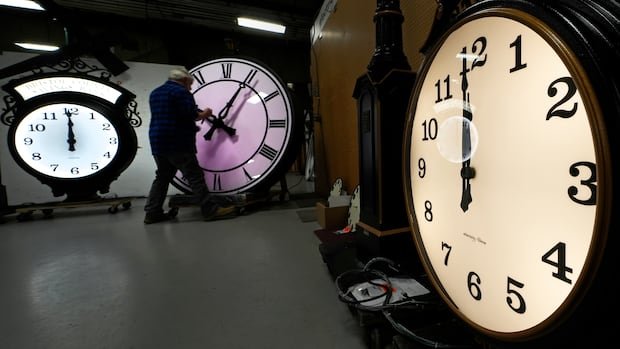

For over five decades, humanity has utilized “leap seconds” to synchronize our timepieces with the Earth’s rotation. Recently, a global timekeeping organization in France opted to eliminate leap seconds, allowing clocks to gradually drift out of sync by as much as an hour over centuries or even millennia.
The precise atomic time, established in the 1950s by monitoring atomic vibrations, slightly differs from solar time, linked to the sun’s position in relation to Earth. This variance originated from the gradual deceleration of the planet’s rotation. To rectify this mismatch, the leap second was introduced in 1972, immediately adding ten seconds to our clocks.
Since then, the International Earth Rotation and Reference Systems Service has been monitoring the discrepancy between solar and atomic time, deciding when to insert an extra second. This adjustment occurs either at the end of December or June. Leap seconds have been added 27 times, with the most recent addition in 2016.
Failure to make these minor corrections would not be noticeable in our lifetimes, but could eventually lead to significant disruptions, such as experiencing the brightest part of the day at midnight and the darkest at noon.
Similar to leap years, which add a day to February every four years to align the Gregorian calendar with the seasons, leap seconds ensure accurate timekeeping. However, the management of leap seconds is becoming increasingly challenging as more systems rely on precise time synchronization.
The decision to eliminate leap seconds stems from the complications they pose to technology and telecommunications industries. Discrepancies in implementing leap seconds across networks can lead to system failures, as seen in incidents like Reddit and LinkedIn crashes in 2012 and brief outages at Cloudflare in 2016.
The recent proposal to accumulate leap seconds until they reach 3,600 seconds, equivalent to an hour, before adjusting clocks, aims to alleviate these challenges. This change will be implemented in May 2027, shifting the issue to future generations.
While some experts support this approach, others like Paul Delaney from York University express concerns about the impact on computerized systems. Despite the complexities of Earth’s rotation and the challenges of perfect timekeeping, experts like Samantha Lawler from the University of Regina believe that accepting slight inaccuracies in timekeeping is inevitable and part of our long history of tracking celestial movements.