
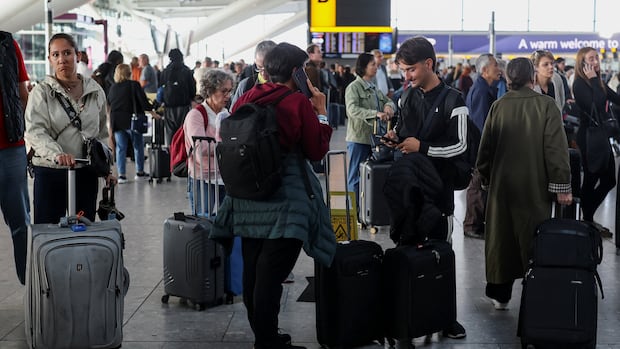

On Tuesday, hundreds of flights were cancelled following a technical issue within the air traffic control system of Britain, leading to significant disruptions at key airports throughout the U.K.
The National Air Traffic Services (NATS) in Britain reported a malfunction in its flight processing system, which impacted flights nationwide.
These cancellations and delays have reignited concerns regarding NATS, three years after a flight-plan processing failure resulted in even greater disturbances.
By Tuesday afternoon, NATS announced that the problem affecting its flight data processing system had been resolved, earlier assuring that “safety was not compromised.”
“The recovery from today’s system issue has taken longer than we anticipated. Our system issue is now fixed, we are back to normal operations, and we are doing everything possible to address the backlog of flights,” NATS stated on X.
In a later update, NATS indicated that full recovery from the disruption would take time and noted, “this has been a very complex recovery and has created challenges for the entire aviation network.”
CEO Martin Rolfe told Sky News that NATS had not yet “fully conducted the investigation” to determine the cause of the issue.
“We still do not have a clear understanding of what went wrong,” Rolfe remarked.
At least 625 flights operating to and from U.K. airports, including London Heathrow, faced cancellations, impacting services from various airlines such as British Airways, EasyJet, KLM, and Lufthansa, as reported by Flightradar24.
Numerous passengers took to social media to express their dissatisfaction about being stuck on the tarmac for extended periods before their flights were ultimately cancelled. Many voiced their annoyance regarding the lack of communication from the airlines.
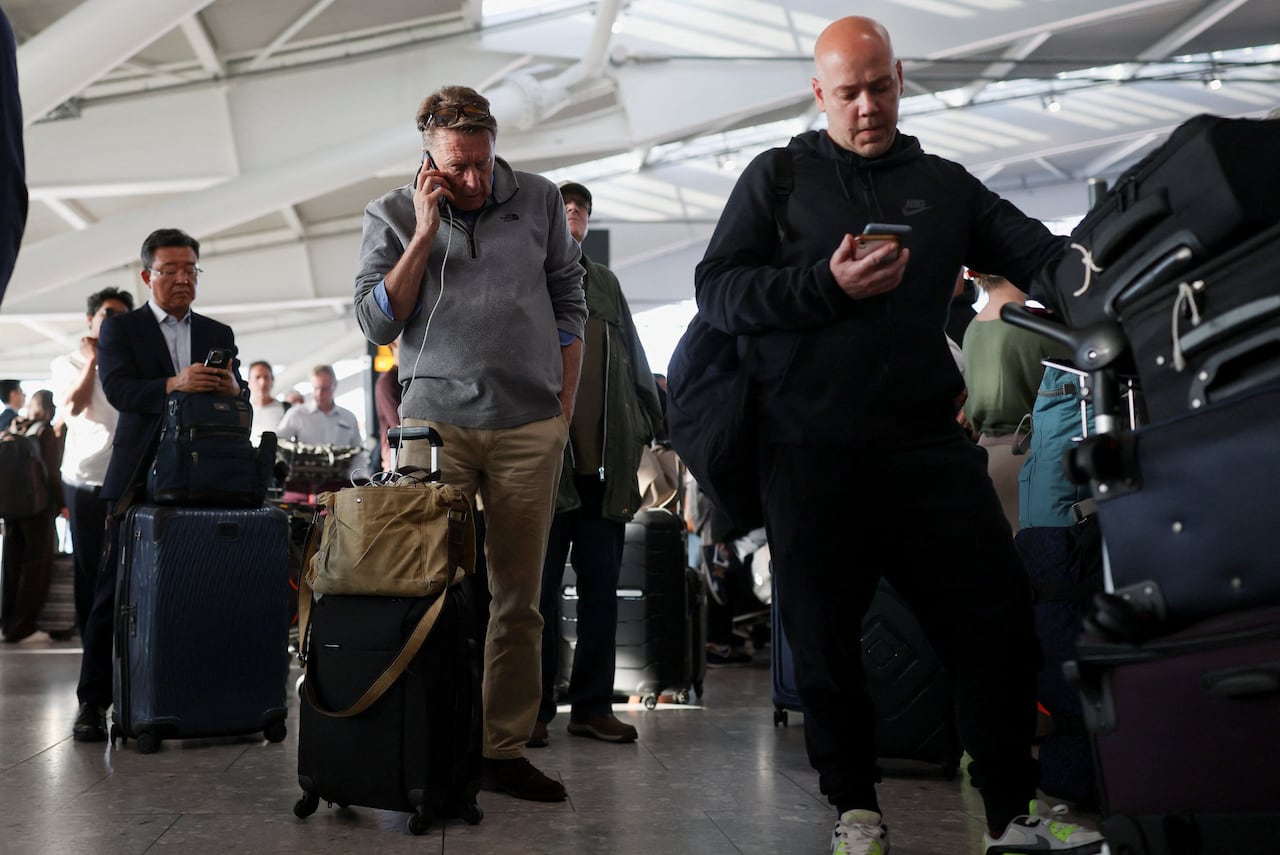
Passengers stranded in Heathrow Airport’s Terminal 5 on Tuesday. Some voiced their frustration over the inadequate communication from airlines regarding the delays. (Isabel Infantes/Reuters)
The airports affected included Stansted and City in London, along with those in Manchester, Birmingham, Gatwick, and Scotland. They advised travelers to verify the status of their flights with their airlines.
The budget airline EasyJet mentioned that some of its flights were “unable to operate” due to the system failure, resulting in “delays to flights across Europe.”
Demands for Resignations and Reform
Ryanair reported that approximately 150,000 of its passengers experienced delays of up to eight hours, leading to the cancellation of over 200 flights, and urged Rolfe to resign.
“How many more failures must passengers endure before the overpaid and ineffective NATS CEO, Martin Rolfe, takes responsibility for his ongoing mismanagement and resigns?” questioned Ryanair Chief Operating Officer Neal McMahon.
NATS did not immediately respond to a request for comment regarding McMahon’s statement.
Wizz Air also called for immediate reform of the air traffic control system, stating that airlines, passengers, and airports should not continue to bear the consequences of recurring system failures.
“A critical national infrastructure provider should not repeatedly disrupt the aviation system. NATS is simply not fit for its current role,” Wizz Air asserted.
Britain’s aviation regulator stated it expects NATS to provide a comprehensive report on Tuesday’s incident.
The Civil Aviation Authority indicated it would then assess whether any additional measures need to be implemented to ensure the reliability of the U.K.’s air traffic control system.