
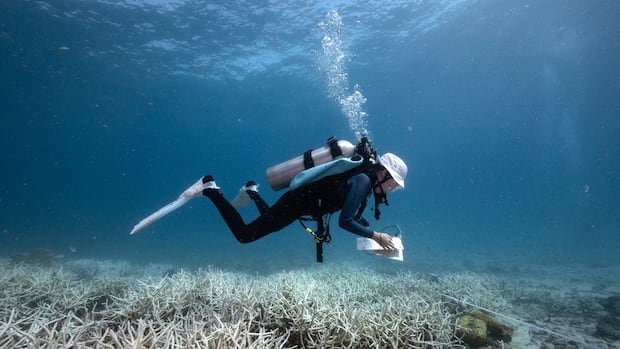

The latest global report on coral reefs reveals a significant decline in the proportion of reefs covered by living hard corals. As the world braces for a potentially record-breaking El Niño peak, recent research indicates a heightened intensity in the naturally-occurring warming event, reflected in coral skeletons.
According to the 2025 Status of Coral Reefs of the World report, marine heatwaves and bleaching events have continuously impacted coral reefs worldwide. Global hard coral coverage has dropped to around 25%, a sharp decrease from the 30-40% levels seen in the 1980s.
Lead author Manuel González Rivero highlights the shrinking window for coral recovery due to more frequent extreme ocean heat events. The report notes a concerning 9.5% decline in recent coral cover compared to previous decades, signaling the loss of substantial coral areas globally attributed to climate change.
Despite the potential for coral recovery, the repetitive stress on reefs, particularly from global bleaching events, raises concerns. The report underscores the urgent need for sustained funding and standardized monitoring methods to enhance understanding and conservation efforts for coral reefs globally.
While some regions have seen stable or growing coral cover, the impact of rising ocean temperatures due to human activities poses a threat even to these areas. The report emphasizes the importance of immediate action to curb greenhouse gas emissions to mitigate further coral reef decline driven by climate change.
As El Niño events show signs of increasing strength, recent studies suggest a historical trend of stronger El Niños in coral geochemistry records. This underscores the urgency to address climate change and its impact on coral reefs, as the future of these vital ecosystems remains at stake.