
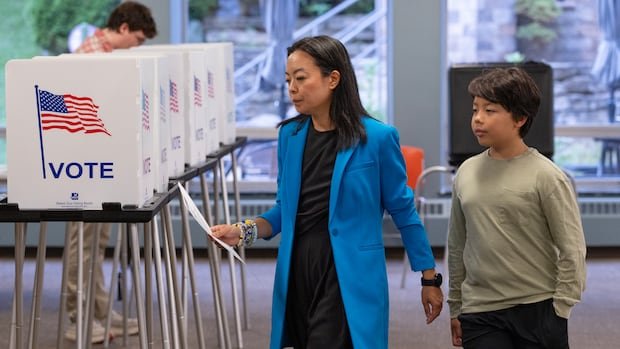

As the United States approaches the midterm elections, a challenging primary season has deepened the divide between the insurgent progressive and centrist factions of the Democratic Party. The upcoming battle is crucial, not just for control of Congress in November, but also for setting the stage for the 2028 presidential race.
Centrists advocate for moderate and practical policies as the key to flipping seats from Republican control, while progressives argue that uninspiring establishment candidates will not mobilize a coalition of young people, the working class, and diverse voters needed for victory.
Hans Noel, an associate professor of Government at Georgetown University, expressed uncertainty about which group holds more appeal, highlighting the dilemma of balancing policy positions and personal likability in making electoral predictions.
In recent primary elections, progressive candidates faced mixed outcomes. In Wisconsin, moderate David Crowley clinched a narrow victory over Francesca Hong, a self-proclaimed Democratic Socialist. Hong’s campaign stumbled due to controversial past statements concerning police funding, ICE abolition, and Thanksgiving, issues she later distanced herself from.
Progressive candidates elsewhere, like Abdul El-Sayed in Michigan, have seen success campaigning on platforms including medicare for all and ending military aid for Israel. El-Sayed’s victory underscored the growing influence of progressive voices within the party.
Despite these wins, discontent among young voters persists, with many feeling disillusioned by the Democratic Party’s perceived lack of a clear stance. The ongoing debate between progressive and centrist camps continues, with each side presenting its vision for the party’s future.
As the Democratic Party navigates this internal struggle, the broader question remains: can progressives secure key battleground states in upcoming elections? While progressives emphasize passion and policy change, moderates stress the importance of appealing to a wide spectrum of voters, particularly in swing states.
Amidst these debates, the future direction of the Democratic Party hangs in the balance, with the upcoming elections poised to shape the party’s trajectory for years to come.