
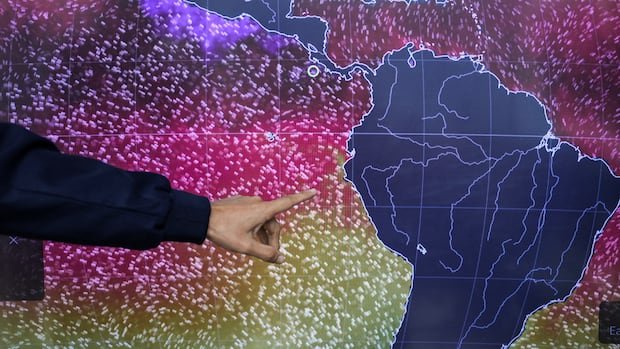

El Niño, a natural climatic phenomenon known for causing periodic global temperature spikes, is predicted to reach its peak in several months and extend through the following spring, according to experts. The impacts of El Niño are already evident in current weather patterns and human responses.
A visual examination reveals the low water levels in the Panama Canal due to decreased rainfall associated with El Niño. In Gamboa, Panama, ships navigate the canal near a hydrometeorological monitoring station, reflecting the effects of the water shortage (Enea Lebrun/Reuters). The Panama Canal Authority is monitoring the situation closely, with hydrologist Ricardo Guete pointing out the low water levels on a gauge at the monitoring station in Gatun Lake. The authority plans to limit daily transits starting in early September in anticipation of an extended El Niño season.
The warming of the eastern Pacific caused by El Niño has led to displaced seabirds, such as blue-footed boobies, gathering near the Panama Canal in large numbers. This disruption in marine food supplies has prompted unusual bird sightings near Panama City (Enea Lebrun/Reuters).
Across Latin America, governments are taking proactive measures in response to the strengthening El Niño phenomenon. They are mobilizing firefighters, activating contingency plans, and fortifying water, energy, and transportation systems to mitigate potential drought, extreme heat, flooding, and other climate-related disruptions in the coming months. In Honduras, the Secretariat of Risk Management and National Contingencies has issued alerts due to adverse climate conditions affecting agriculture and livestock (Orlando Sierra/AFP/Getty Images).
Indonesia is experiencing contrasting impacts of El Niño, with salt farmers in West Java province benefiting from a drought while crop farmers face challenges from the scorching heat. The Meteorology, Climatology, and Geophysics Agency of Indonesia warns of an intense and prolonged dry season, partly attributed to El Niño (Willy Kurniawan/Reuters). The escalating El Niño has set intensity records early on, with United Nations officials cautioning about its potential to exacerbate extreme weather events globally.
In Canada, models indicate a warmer winter ahead, particularly affecting British Columbia with reduced precipitation and snowpack due to El Niño. Additionally, the Atlantic may experience fewer tropical storms during this period. The gradual development of El Niño allows governments the necessary time to prepare for its severe impacts, as evidenced by Peru’s President Keiko Fujimori making El Niño readiness a priority (Ernesto Benavides/AFP/Getty Images).
As El Niño continues to evolve, its influence on weather patterns and environmental conditions worldwide is expected to intensify. While not the direct cause, El Niño can contribute to environmental challenges, such as Indonesia’s ongoing wildfire season, by creating conditions conducive to rapid fire spread. The potential consequences of a robust El Niño underscore the importance of readiness and proactive measures to mitigate its effects.
For further insights into the anticipated impacts of a strong El Niño on Canada and other regions, viewers can access a related video presentation (CBC). The video content elaborates on the implications of an impending strong El Niño year and its potential effects on various regions, including Canada.
The ongoing developments related to El Niño emphasize the necessity for robust preparedness measures and proactive responses to minimize the negative consequences associated with this climatic phenomenon.