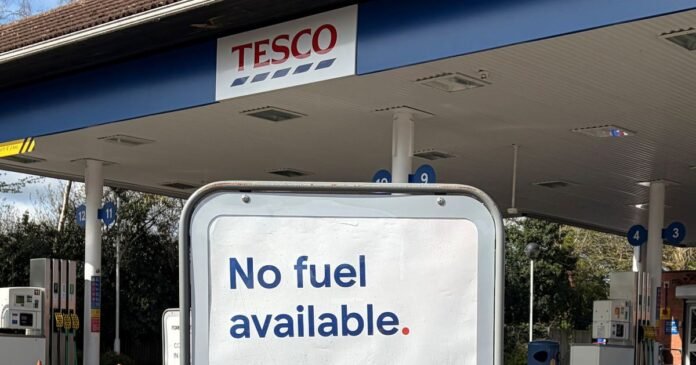

A former executive of an oil company has advised government officials to contemplate implementing driving restrictions in anticipation of a potential fuel supply crisis in the UK.
Nick Butler, a former head of strategy at BP and a former policy advisor to Gordon Brown, emphasized the urgency of taking prompt action to address the escalating fuel scarcity. One of the proposals he put forward involved restricting drivers to specific days on the road based on their vehicle registration numbers.
In addition, Butler suggested the concept of granting employees an extra day off per week to reduce commuter traffic, thereby alleviating the pressure on the country’s fuel reserves. He pointed out that a reduction in fuel usage could be achieved if consumption is curbed by a certain percentage.
Speaking on BBC Radio 4’s Today programme, Butler stressed the importance of safeguarding critical sectors such as food supply, healthcare, and education while devising strategies to regulate the market for the general populace. He dismissed the notion of implementing ration books but advocated for measures like alternate driving days and additional weekly holidays, similar to practices adopted in some Far East countries.
Recent developments have seen several major supermarkets displaying ‘no fuel’ signs at their petrol stations, signaling a period of uncertainty in global oil markets. The closure of the Strait of Hormuz has disrupted the flow of about one-fifth of the world’s oil through this vital maritime route annually, leading to fuel shortages in the UK.
Notably, Sainsbury’s petrol stations in various locations, including Bridgwater, Bamber Bridge, Darlington, and Kidderminster, are experiencing diesel shortages. The fuel crisis has also impacted Tesco, with instances of pump closures in Cheshire due to limited availability.
Although concerns have arisen regarding fuel supply disruptions, Fuel Industry UK has assured that the petrol and diesel supply in the UK remains stable. Prices at Sainsbury’s outlets are currently lower compared to other supermarkets, with unleaded petrol costs rising since the geopolitical tensions initiated by President Donald Trump earlier this year.
The ongoing conflict has substantially increased Brent crude prices, resulting in elevated fuel costs for consumers. RAC data indicates a significant surge in petrol and diesel prices since the geopolitical turmoil began, with experts warning of further price escalations in the near future.
Steve Gooding from the RAC Foundation highlighted the financial toll on British motorists and businesses due to the conflict in Iran, emphasizing the impact on household budgets and transportation expenses for companies. The ripple effects of higher fuel prices are expected to contribute to the overall cost-of-living challenges faced by individuals and businesses alike.
Retailers like Sainsbury’s and Asda have assured customers of continuous monitoring of fuel stock levels and normal operations at their forecourts. Meanwhile, Morrisons fuel stations, under MGF ownership, declined to provide comments on the fuel supply situation. Tesco’s response to the situation is currently pending.
Stay updated on money-saving tips and exclusive offers by subscribing to the Mirror Money newsletter.