
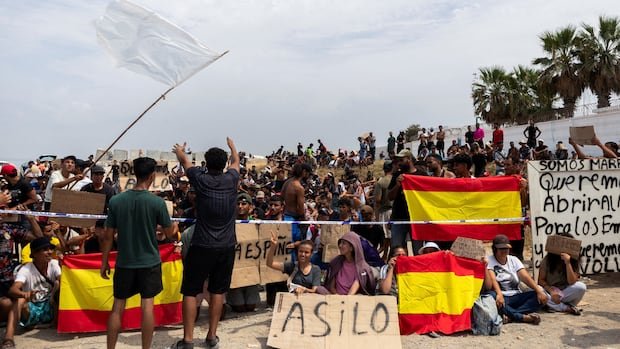

Hundreds of migrants in Ceuta, Spain’s North African enclave, gathered at a beach to demand asylum from Spanish authorities instead of being returned to Morocco. They were part of the 5,000 to 8,000 migrants who stayed in Ceuta following a recent mass border crossing that saw over 72,000 people enter the territory. Most migrants were living in challenging conditions on El Trampolin beach or in the city outskirts while hoping to move on to Europe.
Protesters displayed Spanish flags and banners with messages like “We don’t want to go back to Morocco” and “We are also human,” while chanting slogans such as “We’re tired” and “We need a solution.” Some migrants were seen washing clothes or fishing with makeshift bamboo rods on the rocky shores. Interior Minister Fernando Grande-Marlaska stated that irregularly entered migrants would not be permitted to stay in Ceuta, travel to mainland Spain, or obtain legal status, except in extreme vulnerability cases.
Health services in Ceuta were strained, with reports of diseases like infectious diarrhea and scabies spreading among migrants. Violence-related injuries, such as broken noses and stab wounds, were also on the rise. Health Minister Monica Garcia denied claims of collapsed health services but acknowledged the pressure they were under. Migrants cited poor working conditions in Morocco as their reason for seeking asylum in Spain, with many expressing the desire for better opportunities in Europe.
Individual stories revealed the challenges migrants faced, including a perilous journey across multiple countries and personal struggles, such as persecution over sexual orientation. The migrants expressed their hopes for a better life and job opportunities in Europe.