
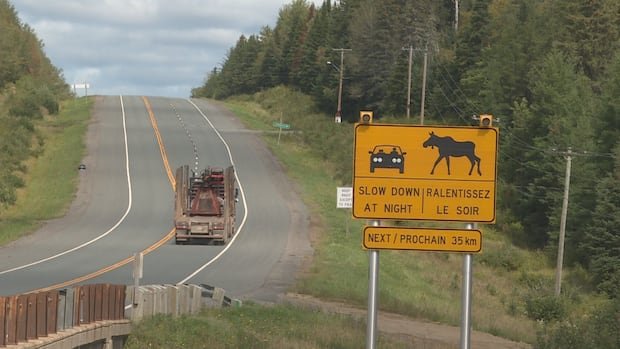

On a dim Saturday evening towards the end of August, the Chaleur Lightning hockey team had recently completed an exhibition match against the Miramichi Timberwolves and were on their way back to Bathurst on the team bus. Assistant coach Alex Ouellet recalled hearing the driver gasp shortly after departure. Within moments, a collision occurred as the bus encountered a moose on the highway. Fortunately, all team members and coaches emerged unscathed, with only the driver sustaining minor scratches.
The encounter with the large animal left a lasting impression on Ouellet and the team, reminiscent of similar incidents experienced by other New Brunswickers. Ouellet expressed that the event would stay with him, especially during evening and nighttime travels. Interestingly, the province announced the addition of two new wildlife crossings in the same area that very week.
New Brunswick employs various measures to deter moose from straying onto roadways, such as wildlife fencing and crossings. Transportation Minister Chuck Chiasson explained that the placement of these measures is determined based on collision data provided by law enforcement. Presently, wildlife fencing lines both sides of 331 kilometers of New Brunswick highways to mitigate wildlife-related accidents.
Despite the extensive fencing, the province has constructed 82 wildlife crossings, including concrete tunnels, in different locations. These tunnels, with dimensions exceeding four meters in height and width, are designed to facilitate safe passage for animals. Wildlife ecologist Graham Forbes highlighted the importance of intuitive design to encourage animal use of the tunnels.
Forbes’ research revealed that wildlife tunnels are not exclusive to large mammals and are utilized by various wildlife species. The Department of Transportation noted that while the tunnels have not significantly reduced collisions, their priority remains ensuring public safety by implementing effective mitigation measures.
Ouellet acknowledged the necessity of continued safety measures along the highway frequented by the Chaleur Lightning team. Despite recognizing the limitations in preventing all accidents, he emphasized the importance of proactive measures to minimize risks posed by wildlife encounters.