
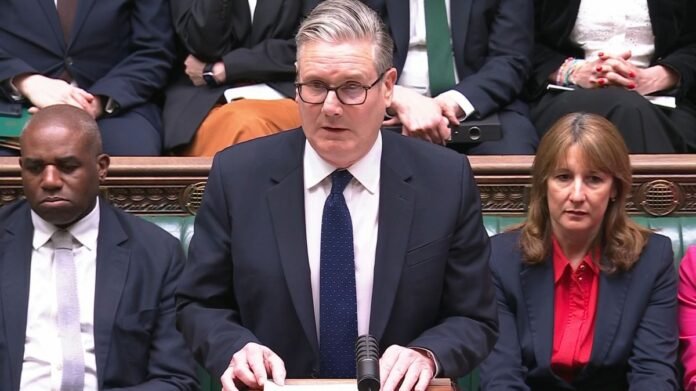

Keir Starmer expressed astonishment before Members of Parliament at not being informed about Peter Mandelson failing security vetting. During a lengthy address in the Commons, the Prime Minister conveyed his frustration with Foreign Office officials for the lack of communication, stating that the oversight leading to this situation was beyond belief. He emphasized that had he been aware of the UK Security Vetting’s disapproval of Lord Mandelson, he would not have proceeded with the appointment.
The Prime Minister announced the revocation of the Foreign Office’s authority to override vetting decisions and initiated a comprehensive review of the vetting process. Starmer criticized the deliberate withholding of information regarding Lord Mandelson’s security clearance status, labeling it as a failure of accountability and governance. He highlighted the lack of transparency in the system and stressed the need for a more responsible approach to such crucial matters.
Moreover, Starmer expressed his surprise at not being informed about UK Security Vetting’s recommendation against granting developed vetting clearance to Lord Mandelson. Subsequently, he appointed Sir Adrian Fulford to lead a review aimed at enhancing the decision-making process regarding security vetting. Starmer reiterated his disappointment at the lack of disclosure at various stages and emphasized the necessity for improved communication and transparency in such critical matters.
During the parliamentary session, left-wing MPs, including figures from the Labour Party, criticized Starmer for the handling of the situation. Veteran MP Diane Abbott questioned the focus on bureaucratic processes over transparency and accountability, emphasizing the public’s need for confidence in elected officials. Meanwhile, John McDonnell and other Labour backbenchers expressed bewilderment over Lord Mandelson’s appointment and raised concerns about the lack of information sharing among government officials.
The Prime Minister faced sharp criticism from Lib Dem leader Sir Ed Davey, who called for Starmer’s resignation, citing the need for accountability and integrity in government. Davey compared Starmer’s leadership to that of Boris Johnson, highlighting the importance of honesty and accountability in addressing key national issues. In response, Starmer defended his actions and decisions, acknowledging the mistakes made in appointing Mandelson and expressing remorse for the oversight.
The debate also touched upon the possibility of leaks and political maneuvering surrounding Mandelson’s appointment, with suggestions that the process was exploited to force the government’s hand. The ongoing scrutiny and questioning from MPs underscored the gravity of the situation and the need for a more robust and transparent decision-making process in government appointments.
As the discussion continued, Starmer faced queries about potential similar appointments to the Foreign Office and pledged to investigate the matter. The contentious debate saw disruptions as MPs were removed from the chamber for unparliamentary behavior, highlighting the intense scrutiny and tensions surrounding the issue at hand.