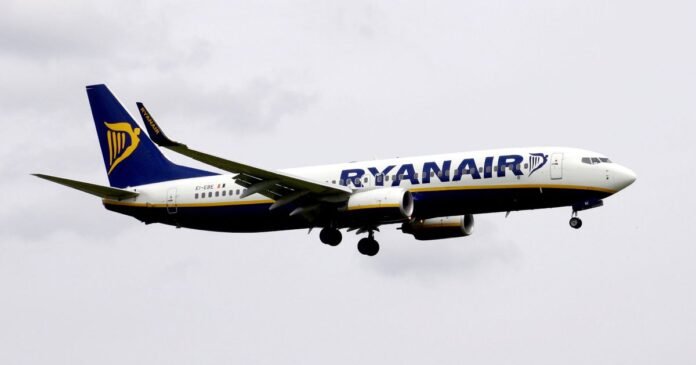

A Ryanair flight departing from Manchester Airport en route to Sandefjord Airport, Torp in Norway had to turn back mid-flight due to a sudden emergency. The flight, numbered RK3226, experienced a delay before takeoff and flew normally for 40 minutes until reaching its cruising altitude of 37,000ft over the North Sea. At that point, a Squawk 7700 code, indicating a general emergency, was broadcast.
Flight tracking data revealed the aircraft’s abrupt change in direction back towards the UK coastline before making the emergency call. The plane successfully landed at Manchester Airport on runway 23R at 9:55am, with air traffic control providing priority assistance during the return.
According to a Ryanair spokesperson, the flight returned to Manchester due to a minor technical issue, prompting the transfer of passengers to a replacement aircraft for their journey to Oslo Torp. The replacement flight departed at 11:21am local time. Despite the emergency diversion, the plane did not necessitate an emergency landing.
In aviation protocol, entering the emergency code 7700 alerts air traffic control of distress and the need for priority handling. This code serves as a general emergency signal for various urgent situations that do not involve hijacking or radio failure.
In a separate incident earlier this month, a Ryanair flight encountered a mid-air emergency due to a malfunction, triggering a “maximum alert” response. The flight from Sicily to Milan Malpensa Airport faced landing gear issues shortly after takeoff, prompting the transmission of a Squawk 7700 signal. Despite the technical problem, the aircraft continued its journey and successfully landed after resolving the issue.
The landing gear failure necessitated a thorough inspection to determine the root cause, but the situation was resolved before landing, ensuring the safety of all passengers and crew on board.