
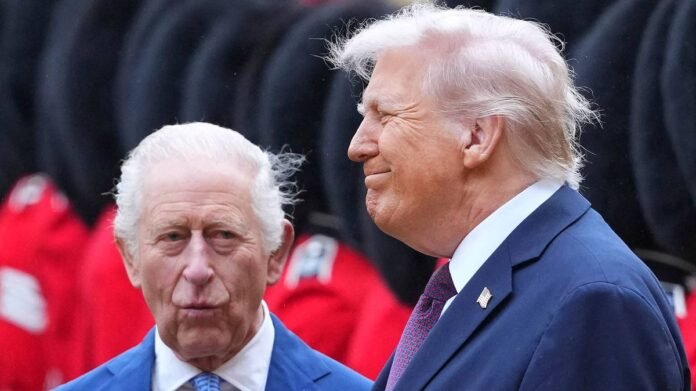

As King Charles and the Queen travel to the United States, both British and American security teams are not just finalizing logistics but also assessing the safety of the visit. The main concern is whether the security measures in place are adequate.
Considering the current circumstances, it is evident that the safety level is not sufficient. The risks involved are not only physical but also political, especially when interacting with a controversial figure like Donald Trump. Recent events, such as the attempted attack on Trump during the White House Correspondents Dinner, highlight the potential dangers of being in close proximity to him.
Trump’s divisive nature makes anyone near him susceptible to risks and threats. Security measures can only do so much in a country where gun violence is prevalent. The unstable political climate in the US further complicates the situation, emphasizing the need for caution during the State visit.
Despite the challenges, the visit continues, raising questions about the motivations behind honoring a leader who has shown disrespect towards Britain and its interests. The visit is no longer merely a diplomatic gesture but a high-stakes event shadowed by recent security concerns.
Furthermore, Britain’s stance on issues like Iran differs from Trump’s approach, adding another layer of complexity to the visit. The risks associated with the visit, particularly to the safety of the monarch, cannot be overlooked, considering the security threats in a country with widespread gun ownership.
The decision to proceed with the visit sends a message that accommodating a controversial leader takes precedence over ensuring the safety and well-being of the King. This normalization of risks raises significant concerns about the underlying motives behind the visit and the potential consequences.
The visit may serve as an opportunity for diplomacy, but it also raises ethical questions about the compromises made in the name of international relations. The presence of the King in such circumstances could be exploited for political theater, despite the inherent risks involved.
Ultimately, the decision to proceed with the visit highlights the delicate balance between diplomacy and safety, emphasizing the need for careful consideration in navigating complex international relationships.