


Vincent Thamae recalls his grandfather sharing stories about the Sharpeville massacre.
On March 21, 1960, police enforcing apartheid in South Africa opened fire on peaceful demonstrators in a township near Johannesburg, resulting in the deaths of numerous individuals, including men, women, and children.
“My grandpa said that the people who did this were not human,” Thamae, a resident of Sharpeville, shared with As It Happens host Nil Köksal. “It wasn’t until I grew older that I began to grasp the meaning behind his words.”
Since 2018, Thamae has been gathering testimonies from survivors and families of victims for the organization Voices of Sharpeville. Presently, he serves as a liaison between these survivors and a group of attorneys assisting them in filing a class-action lawsuit against the government.
The lawsuit aims to secure compensation for the victims and their descendants while urging the government to repeal a law from the apartheid era that protects South African officials from accountability regarding the massacre.
‘Not possible to forget’
Thousands gathered in Sharpeville to protest against apartheid pass laws, which limited movement and enforced racial segregation, when the police opened fire.
According to police documents from that time, 69 individuals were reported killed and 180 were injured, while research referenced by the plaintiffs suggests the death toll was 91, with over 238 injured.
Abram Mofokeng, who is 87 years old, was just 20 when he was shot in the foot and back while escaping the gunfire. A bullet still remains lodged in his back.
“It’s impossible to forget what took place in 1960,” Mofokeng remarked. “There isn’t a day that goes by without reflecting on how we have been impacted.”
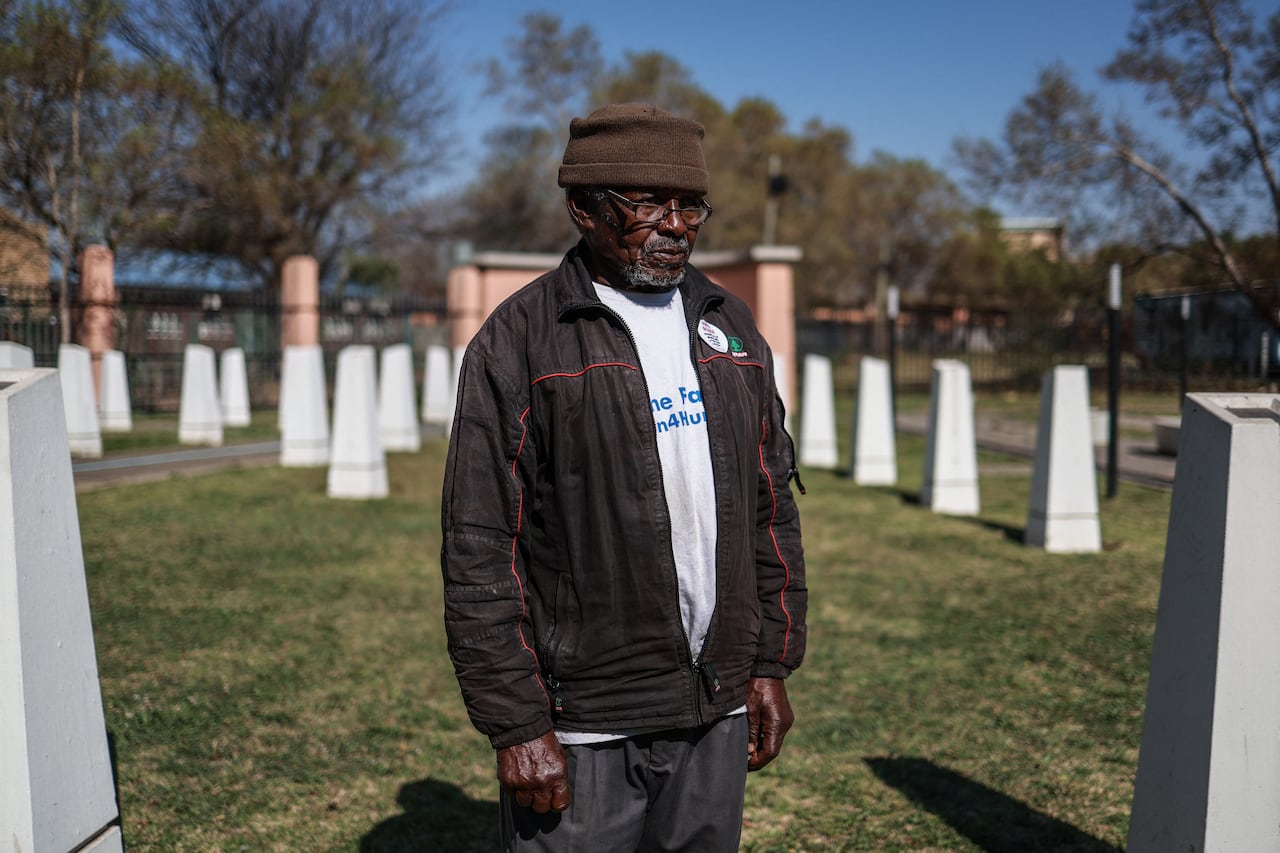
Abram Mofokeng, 87, one of the survivors of the Sharpeville Massacre, poses for a photograph at the memorial site for the victims in Sharpeville, on Sept. 3, 2026. (Phil Magakoe/AFP/Getty Images)
Mofokeng is among three representatives from Sharpeville serving as plaintiffs in the broader case initiated by Lawyers for Human Rights.
The other two, Paulina Mathinye and Ishmael Poho, both lost their fathers during the massacre when they were young.
More than 70 survivors and relatives have shown interest in or support for joining the lawsuit.
The government has yet to respond to requests for comments.
Why now?
Those affected have persistently sought compensation. Following the massacre, around 258 claims were submitted. However, in 1961, the government introduced the Indemnity Act, which protected officials from legal accountability and nullified those claims.
Apartheid officially came to an end in South Africa in 1994, yet the protective law is still in place today.
The attorneys representing the Sharpeville plaintiffs are advocating for the repeal of this law, contending that it infringes upon their clients’ constitutional right to access the judicial system.
They further assert that this case aims to rectify shortcomings left by the Truth and Reconciliation Commission process, which only granted reparations to 51 Sharpeville survivors.
Dan Leader, a partner at the British human rights law firm Leigh Day that is assisting the plaintiffs, referred to the case as part of South Africa’s “unfinished business.”
“This marks a pivotal moment for contemporary South Africa,” Leader stated.

Performers stand after re-enacting the 1960 Sharpeville Massacre at the memorial site for the victims in Sharpeville on Thursday. (Phil Magakoe/AFP/Getty Images)
Should they succeed in overturning the Indemnity Act, the plaintiffs’ claims for damages could move forward. The lawyers did not disclose a total amount for the claim but indicated that it would differ for each individual and be determined with the assistance of experts.
Thamae, a member of the Pan Africanist Congress political party, is optimistic that reparations could extend beyond financial compensation to include long-lasting benefits, such as assured access to education for the children of the plaintiffs.
Many individuals from Sharpeville during that period, he notes, were dispossessed of their lands by the apartheid government, leaving a lasting impact that has affected generations.
“They were excluded from participating in the country’s economy,” he stated.
Thamae emphasizes that gathering accounts from survivors and descendants of victims has been a slow and painful process, reopening old wounds that never fully healed.
“We still struggle to comprehend how other human beings could perpetrate the actions that the government did to the people. We have yet to come to terms with what transpired.”