
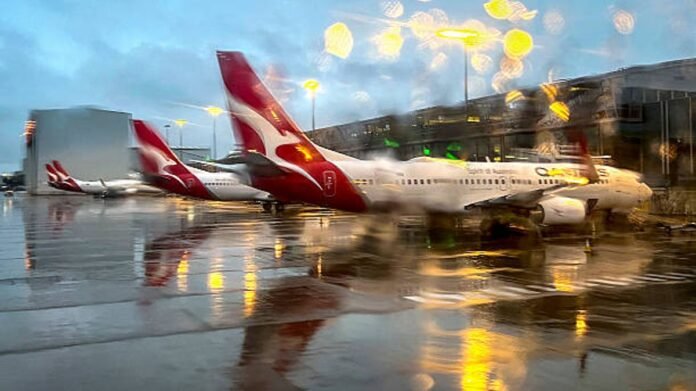

Australian airline Qantas is planning to reduce its domestic capacity due to the surge in oil prices caused by the conflict in the Middle East. The airline anticipates facing additional fuel costs of hundreds of millions of pounds in 2026.
Rising oil prices have impacted the aviation industry following Iran’s blockade of oil tankers in the critical Strait of Hormuz trade route. This disruption, a result of joint US-Israeli strikes on key Iranian sites, has affected about 20% of global oil trade passing through the strait.
Qantas, a prominent international and domestic carrier operating from Heathrow Airport, stated that the increased international airfares would only partially offset the heightened fuel expenses.
Despite hedging its oil supply, Qantas expects to spend between $3.1 billion and $3.3 billion Australian Dollars on fuel by June 30. The company’s inability to hedge refinery costs, which have surged five times, will lead to an additional $600 million to $800 million in fuel expenses for the latter half of the year. However, this could be partly offset by better-than-expected earnings from international flights.
Qantas projects a doubling in revenues per available seat kilometre for international flights after major Middle Eastern airlines scaled back services due to the conflict. To address the increased fuel costs, the airline is reducing domestic and regional services, planning to cut seat capacity by 5% in the upcoming weeks.
The airline will discontinue flights that are not at full capacity and consolidate services on high-demand capital city routes. Qantas emphasized its close collaboration with the government and jet fuel suppliers to ensure a stable fuel supply throughout April and into May amidst the ongoing uncertainty in global fuel supply chains.