
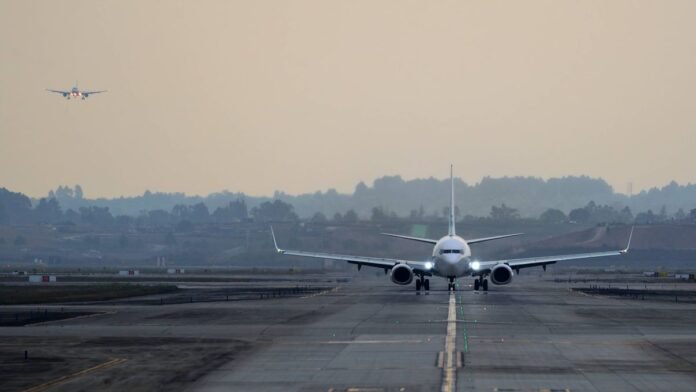

Europe’s smaller airports are facing a significant risk to their existence, as per the head of the Airports Council of Europe. Olivier Jankovec, the director general of ACI Europe, has cautioned that some of the continent’s minor airports may not be able to survive if shortages of jet fuel, caused by the crisis in the Middle East, lead to widespread cancellations of flight routes.
The closure of the Strait of Hormuz during the Iran War has resulted in a doubling of jet fuel prices, prompting many airlines to cancel their flights. This has particularly impacted regional airports, as they are more susceptible to airlines reducing capacity and increasing fares due to the price sensitivity of demand on their routes compared to larger airports. Mr. Jankovec noted that regional airports are currently operating at levels approximately 30% lower than in 2019 due to the effects of the coronavirus pandemic.
According to the aviation boss, the combination of high jet fuel prices and the possibility of a new cost of living crisis poses a severe threat to many regional airports across Europe, creating both supply and demand shocks. He emphasized that this situation poses an existential threat to these airports.
Contrastingly, major airports in Europe are facing a different challenge. Heathrow, the busiest airport in the UK, issued a stark warning about its capacity, attributing the surge in demand for connecting flights to the conflict in the Middle East. The airport’s chief financial officer, Sally Ding, declared that Heathrow is operating at full capacity, with first-quarter figures indicating a 3.7% year-on-year increase in passenger traffic.
The conflict in Iran has led to airspace closures, resulting in a rise in transfer passengers at Heathrow. This trend is expected to continue amid ongoing geopolitical uncertainty, impacting one of the airport’s key international competitors, Dubai.
While Heathrow has temporarily managed to accommodate increased demand, it anticipates that passenger numbers for the remainder of the year will be affected by the significant uncertainty in the Middle East. The airport’s capacity constraints could lead to reduced choices, higher fares for passengers, and missed economic opportunities for the UK.
Heathrow’s £50 billion proposal to expand its capacity through a new 3.5-kilometer runway has faced political challenges for years. The plan aims to boost passenger capacity to 150 million annually from the current 84 million, enabling the airport to handle 756,000 flights per year, up from 480,000. The airport management highlighted that with the right regulatory support and government policies, they are prepared to invest in growth and maintain the UK’s connectivity with the world.
As part of the expansion project, Heathrow plans to redesign a section of the M25, diverting it into a tunnel. The government recently evaluated a competing proposal from the Arora Group, which offered a more cost-effective solution, but ultimately chose Heathrow’s expansion plan. However, the project has encountered delays following a government decision to reassess its overall strategy in the Airports National Policy Statement, now expected to occur later this summer.