
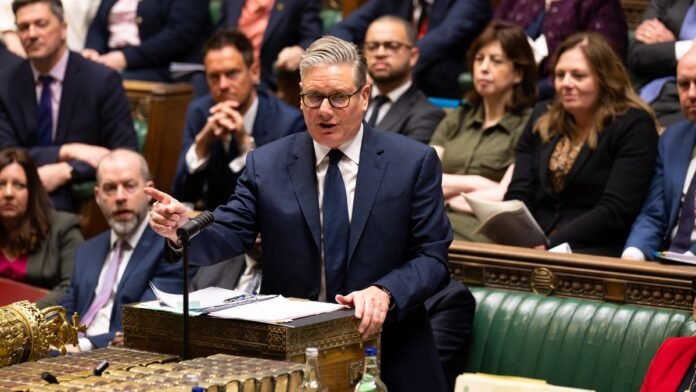

Keir Starmer has dismissed strong criticism from a former Nato chief, who accused the Government of showing a dangerous lack of concern regarding defense issues. The Prime Minister is facing calls to release a long-awaited defense investment plan as concerns grow about the UK’s military capabilities in an increasingly uncertain global landscape. Lord Robertson, a former Labour defense secretary involved in last year’s Strategic Defence Review, raised alarm over the country’s security being at risk and criticized the Treasury’s actions as damaging.
In response to Lord Robertson’s remarks, Keir Starmer affirmed his commitment to ensuring the safety of the British people, emphasizing that he takes this responsibility seriously and does not share the same viewpoint. The Prime Minister defended the Government’s increase in defense spending, citing a rise to 2.5% of GDP last year, partially funded by reductions in foreign aid, with further plans to elevate core defense spending to 3.5% by 2035, aligning with a new Nato objective.
Reports suggest that Rachel Reeves is considering a £10 billion boost in defense spending over four years, despite concerns raised by military leaders about a £28 billion shortfall from years of insufficient investment. The anticipated 10-year defense investment plan, initially planned for release in the autumn, is still pending approval as negotiations with the Treasury continue.
Speaking out publicly, Lord Robertson criticized the expanding welfare budget and the lack of urgency shown by the Prime Minister, highlighting the unpreparedness of the UK for potential conflicts. However, Defense Secretary John Healey disagreed with Lord Robertson’s assessment, emphasizing the Government’s commitment to delivering the strategic defense review and ensuring the defense of the nation.
John Healey reiterated the increasing threats faced by the UK and its NATO allies and emphasized the Government’s readiness to make significant decisions to boost defense investment, marking the largest increase since the end of the Cold War. Despite differing opinions, Labour MP Tan Dhesi echoed concerns about the nation’s readiness to address current threats and stressed the importance of aligning government rhetoric with reality in achieving the 3% GDP defense spending target within the current Parliament.
Additionally, Emma Lewell, Labour MP for South Shields, cautioned against prioritizing defense investment at the expense of welfare recipients, emphasizing the need to strike a balance in government spending priorities.