
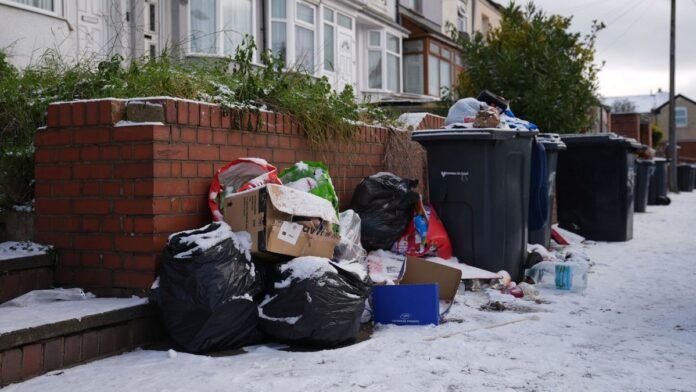

After more than a year of ongoing conflict, the bin strike in Birmingham is on the brink of resolution following the presentation of an improved deal. The city council, under Labour control, has indicated that a negotiated settlement to end the prolonged 476-day dispute is on the horizon. Approximately 400 workers have been engaged in strike action since January of the previous year, resulting in a build-up of waste on the streets for an extended period.
City council leader John Cotton disclosed that an enhanced offer is now feasible due to intensive negotiations that have taken place behind closed doors. Unite trade union leader Sharon Graham hailed the breakthrough as a victory for the striking workers. The initial strike by refuse workers in Birmingham commenced on January 6, 2025, over issues related to pay and potential job losses, escalating to a full strike two months later.
Onay Kasab, Unite’s national lead officer, revealed that the new offer, which is yet to be presented to the union’s members, includes a compensation package of £16,000 for workers. Notably, previous proposals did not include compensation for drivers, a significant change that has contributed to nearing a resolution to the dispute. Last year, Birmingham faced a crisis with a massive 21,000-ton waste accumulation, prompting the council to declare a major incident. Unite had previously hinted at reassessing its ties with the Labour Party as the situation deteriorated.
The recent progress comes shortly before crucial local elections, anticipated to pose challenges for the Labour Party. City council chief John Cotton expressed optimism, stating that a negotiated settlement to end the bin strike is now in sight after months of deadlock. He emphasized the importance of a deal that benefits the workforce, is cost-effective, and avoids repeating past mistakes that could lead to new equal pay issues.
Despite indicating readiness to resolve the strike, Mr. Cotton clarified that finalizing the deal would have to wait until after the upcoming elections due to pre-election regulations. The dispute originated from council plans to eliminate Waste Recycling and Collection Officer (WRCO) roles, which Unite argued would result in substantial pay reductions for hundreds of its members, a claim disputed by the council.
A report by the council’s finance director revealed that the strike had cost the authority £33.4 million. Unite confirmed that the proposed agreement would provide workers with at least a two-year safeguard against the impact of the job evaluation process, an improvement from the previous six-month period. Additionally, agency workers with over a year of service who participated in the strike will have the opportunity for permanent positions.
The union also highlighted that disciplinary matters would be resolved, pension rights would remain intact despite absences during the dispute, and legal actions on both sides would be terminated. Unite general secretary Ms. Graham emphasized the importance of prioritizing the workers’ well-being and dignity throughout the negotiation process.
In response to the recent developments, Labour Party deputy leader Lucy Powell underscored the need for a swift and mutually agreed-upon resolution in Birmingham to avoid prolonged uncertainty and ongoing disputes with other political factions.