

Keir Starmer has increased the pressure on Israel to halt its attacks on Lebanon, citing a looming crisis in the country.
The Prime Minister highlighted the precarious situation in the Middle East, emphasizing the fragility of the ceasefire brokered by the US, Israel, and Iran. He emphasized the urgent need for Lebanon to be included in the ceasefire agreement.
Addressing Donald Trump’s actions, Mr. Starmer criticized the blockade of the Strait of Hormuz, advocating for the vital shipping route to remain open. He reiterated the UK’s stance of not supporting the blockade and avoiding involvement in the conflict with Iran.
During a lengthy statement in Parliament, the PM stressed the importance of approaching the volatile global situation with composure and strength. He condemned Iran’s exploitation of the Strait and emphasized the necessity of restoring freedom of navigation.
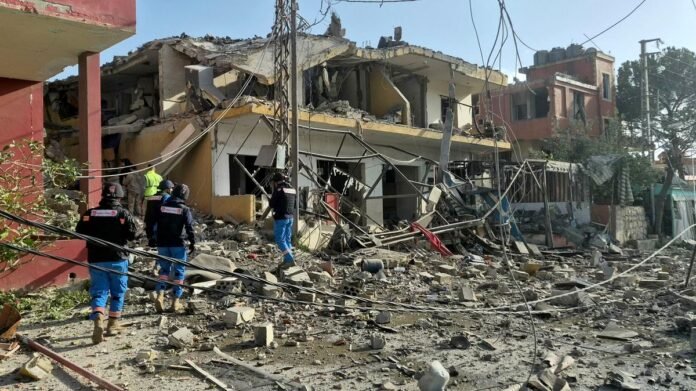
Mr. Starmer called for Lebanon’s immediate inclusion in the ceasefire efforts, emphasizing diplomacy as the preferred approach. He criticized Israel’s strikes for causing severe humanitarian consequences and exacerbating Lebanon’s crisis.
In contrast to Mr. Trump’s aggressive rhetoric, the PM maintained a calm demeanor in addressing the situation in the region. The US President’s decision to block Iranian ports further escalated tensions and impacted the global economy.
The UK Maritime Trade Operations agency issued a notice restricting access along the Iranian coastline in response to the escalating conflict. Meanwhile, Mr. Trump’s threats of a blockade were met with skepticism by Iranian officials.
Asked about supporting a US military blockade, Mr. Starmer clarified the UK’s position of not endorsing such actions. He emphasized efforts to reopen the Strait of Hormuz to stabilize energy prices and ensure free navigation.
A summit co-hosted by the UK and France aims to advance international efforts to resolve the conflict and reopen the vital shipping route. The PM reiterated the importance of restoring full freedom of navigation without hindrances or tolls.
The disruption in the Strait of Hormuz, crucial for global oil and gas transportation, has driven up gas prices. The conflict’s impact could lead to significant financial losses for UK households, according to the Resolution Foundation.
In parliamentary discussions, MPs pressed Mr. Starmer on steps taken by the UK to de-escalate conflicts, particularly in Lebanon. Concerns were raised over Israel’s threats in Lebanon and efforts to secure a ceasefire.
Officials from Lebanon, Israel, and the US are set to meet in Washington to address conflicting reports on Lebanon’s inclusion in the ceasefire agreement. Additionally, UK leaders are engaging in diplomatic efforts to resolve the crisis.
Mr. Starmer assured that the UK’s defense investment plan, delayed for some time, is nearing completion. He emphasized the importance of a robust and practical plan to ensure the country’s defense and security.
Deputy PM David Lammy’s visit to the US included meetings with top US officials to discuss the ongoing crisis. Meanwhile, Rachel Reeves is scheduled to travel to Washington DC for crucial discussions on the economic ramifications of the Middle East conflict.